How One Small Acquisition Transformed a National Succession Plan with Brian Calvert
00:00:00.000 — 00:00:21.840 · Speaker 1
There is a lot of agents that go out there that will sign you up and they disappear like you don't talk to them for a year until they say, hey, your insurance went up 20%. Sorry. Diversification is key in any business in my opinion. So when I sit down and I do my yearly business plans, I knew I wanted to grow. For us.
There's only so many ways you can grow, right? You can get more referral partners and try to grow. That way I can hire more agents and help them grow. But I also feel like the third pillar of that is.
00:00:22.600 — 00:00:43.320 · Speaker 2
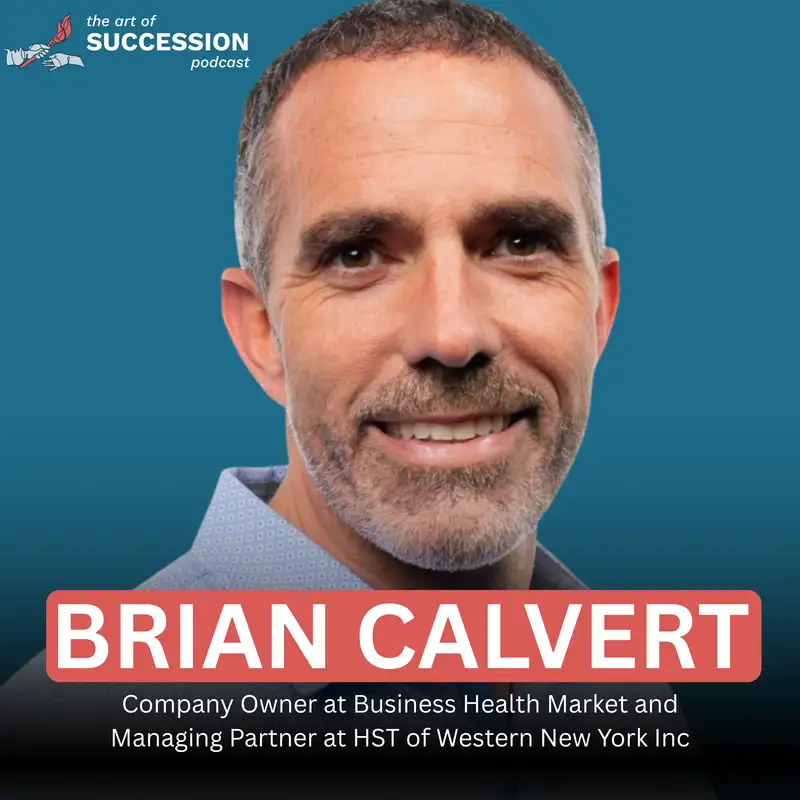
Brian Calvert is the company owner of Business Health Market and managing partner at HST of Western New York, Inc. He specializes in health insurance and employee benefits, helping individuals, solopreneurs and businesses of all sizes design and implement tailored benefits packages that enhance employee retention, satisfaction, and operational efficiency.
00:00:43.360 — 00:00:53.800 · Speaker 1
Let's be honest, we're all told at a young age, go out and get a job. To break that cycle takes a little bit of to push yourself. The risk obviously, is losing income. We all have stable income from working someone else. The benefits are tenfold.
00:00:53.800 — 00:00:56.760 · Speaker 3
What's a common belief among entrepreneurs that you would challenge?
00:00:56.760 — 00:00:59.260 · Speaker 1
Probably the fact that they think that.
00:01:00.420 — 00:01:40.460 · Speaker 4
As you've been listening to this guest, you're probably starting to ask your questions. How do I apply this to our own situation, our own succession story at the company that I'm working in now at GWC. We have built a custom GPT that you can find linked down in the description below on our website. We have loaded this GPT up with all of our knowledge about public accounting and tax preparation around succession planning.
We've also included the insights from the guests from the past two years of interviews at the start of succession. You can find all of that at the custom GPT use at any time of day. Start to apply it to your situation. Ask it the questions that are keeping you awake at night. I want to thank you for listening so far and let's get back to the episode.
00:01:40.860 — 00:01:55.820 · Speaker 5
Welcome to the Art of succession podcast with Barrett Young. Join us as we explore the strategies, stories and insights that shape the journey of leadership, transitions and business success. No matter where you find yourself along the journey, this is the podcast where you'll find the tools to make it happen.
00:01:55.980 — 00:02:24.590 · Speaker 6
My name is Barrett Young and this is the Art of succession podcast. My guest today is Brian Calvert, owner of Business Health Market. Brian did a lateral career move from commercial property management to become a health insurance broker in 2017, and after building a successful practice by himself, he made the strategic move to acquire another book of business and employee benefits.
And today, Brian's going to share his experience running a nationwide. Team. Brian, welcome to the Art of succession.
00:02:24.630 — 00:02:25.750 · Speaker 1
Hi. Thanks for having me.
00:02:25.790 — 00:02:49.390 · Speaker 6
I'm looking forward to this conversation. We both deal a lot in succession planning, mergers and acquisitions, continuity in a change of leadership, change of entity structure. But I'm interested in starting off the conversation today. Like what brings you to the art of succession? What interests you about being on this, sharing your story, and what do you really hope that our listeners gain from this episode?
00:02:49.430 — 00:03:13.930 · Speaker 1
Well, for me, in my line of business, especially on the employee benefits side, I come across a lot of companies that are in the mergers or acquisition space. When we come across that, they just don't know how to handle what to do with their employee benefits, should they keep what they have? Should they get new?
You know, how do they handle that from the employees morale side and things like that? So often people ask me, what do I do? So, um, that's something we could talk about and I think would be useful.
00:03:14.050 — 00:03:35.010 · Speaker 6
Awesome. All right. So let's, um, let's jump into your background just a little bit. I mean, we don't need to spend too much time there, but you've spent already, um, you know, a good, decent portion of your career in commercial real estate. So talk to me about just entering that field, and, um, you know, where the writing on the wall, all your your your history there.
00:03:35.090 — 00:04:28.830 · Speaker 1
Yeah. I mean, you know, specifically, I was a mall manager, right? So I handled shopping center management all across the northeast, up here in Massachusetts and New York. And, uh, as we all know, we saw the Amazon effect, and it came to fruition pretty quickly over a very short period of time where, you know, we kind of saw that locally, you have, shopping centers, you might have 4 or 5 available to you, and we all go to a shopping center and we try out a bunch of clothes and leave.
And now what would happen? People would buy, go to one store and then they'd go online and buy the rest. Right. So what happened, as we know, is that shopping centers started to decline and there was a less need for people like me. Right. So I kind of saw that coming. And I had some good friends in the health insurance industry that were, you know, begging me to say, hey, let's, let's get something off the ground.
And I've always been an entrepreneur by spirit and an entrepreneur by heart. Um, so it was a very easy transition for me to say, hey, it's time to go. And I planned it years in advance and kind of had an exit.
00:04:28.870 — 00:04:33.110 · Speaker 6
So, okay, how did you get into property management in the first place?
00:04:33.470 — 00:04:57.970 · Speaker 1
You know, that's interesting. One of my first jobs I ever had was as a shopping center manager. Before the shopping center manager, I worked in a food court in a in a mall, cleaning tables and all that kind of crap. And then I went to to college and got a degree and all these sort of things. And then as I went back to my career, I worked at a restaurant, and I, I worked in a few other places.
The mall manager at the time who worked at the mall I was at, said, hey Brian, I think you'd be really good at sales. Won't you come work for me? It just just happened.
00:04:58.010 — 00:05:15.210 · Speaker 6
Talk to me just a little bit about the skills required in that sales. There's a direct transfer of that into health insurance. How did that prepare you? Um, you know, what parts did you enjoy? That. And I guess what I'm leading up to is like, why malls had an end date, but why didn't you stay in commercial property management when the time came?
00:05:15.250 — 00:06:16.940 · Speaker 1
I was always an entrepreneur by heart. And let's go back to some of the from the duties as a mall manager. Right. So it's not just running the shopping center. I had employees, I handled up to 60. I had I handled health insurance. But interestingly, one of the things I really loved was when a small business would come to me and say, hey, hey, Brian, I'm thinking about opening a store in your mall, or I want to open up those little carts in the middle of the mall.
And what do I do to get that off the ground? And I really love helping them build a business. And that entrepreneurial side of me came out where I would help them get a business license that would help them, um, maybe try to help them manage a business plan beyond my duties as a mall manager, be honest with you.
But I really enjoyed that. So it really gave me a real taste for that entrepreneurial spirit. And when I strategically wanted to go into health insurance, it wasn't just for me to sell. I wanted to build the team, and I wanted to help other people better their lives and make money. And one of the things I really enjoyed was that building of the team aspect that came along with being in this business, so that was really my focus.
It wasn't just to to go out and sell and make $1 million. It's not what makes me tick. I really enjoy seeing other people succeed. So that's kind of how I rolled into that mindset.
00:06:16.980 — 00:06:30.100 · Speaker 6
Nice. Okay. You said that you had a lead up to this. Like how many years were you looking at this, and were there other paths that you considered before settling on health insurance? Like, talk to me just about that. Uh, those those years?
00:06:30.140 — 00:07:10.800 · Speaker 1
Yeah, it was about two years. I saw that, uh, within our company, the people I worked for, they were starting to offload properties and hand back the keys to lenders and all those sort of things. And for me, I'll be honest, it was very strategic. Strategic in the way that not only did I only look into health insurance just because I wanted to be an entrepreneur, I had a friend that was in it, so it was really natural for me, the knowing when they that I was going to probably be offered and out of my position, they either sold the property or dropped the keys.
You know, it gave me a strategic advantage. I would have got a bonus or a severance package, and it really allowed me to take that investable money and put everything back into the business, because I had a little bit of a cushion. I planned it around that I waited my time until I was able to get a buyout of some sort out of my position, and used that to leap forward.
00:07:10.840 — 00:07:18.640 · Speaker 6
Okay. Did you consider any other paths, or was it the friend and the the interaction with business owners in this piece that really drew you to that?
00:07:18.680 — 00:07:39.360 · Speaker 1
Yeah, that's what drew me. And I honestly, I didn't look at another path. I mean, I have to think back. I may have applied for a few jobs here and there just knowing, but I don't think I was really it didn't happen in my heart. I just did it because let's be honest, we're all told at a young age, you know, go out, get a job, work for the men, do this, do that.
And to break that cycle, it takes a little bit of oomph to to push yourself, and I did. Right.
00:07:39.400 — 00:08:04.900 · Speaker 6
Um, talk to me just about being a mid-career lateral move, because I know there's, you know, that's part of acquiring a business, even if it's just from being an employee to be an owner of a business, that's a move. And, you know, it's got some nerves in it as they go along with it as well. But you're moving from one profession to an entirely different profession.
So, um, talk to me just about some benefits, some risks. Um, you know, as you process that move.
00:08:04.940 — 00:08:35.780 · Speaker 1
Yeah. I mean, the risk obviously is losing income. We all have stable income from working someone else. So that was a little scary. I had saved and prepared for that. The benefits are tenfold. Anyone that's own their own business knows having the flexibility to be with your family and do the things that you love and just decide what your idea of success is, which is really important to me.
Um, when I talk to my new new agents that come on, or any team members knowing having that flexibility is by far the the the biggest pro that I could talk about and no question about it. And that's really what I was searching for. That's what I wanted.
00:08:35.820 — 00:08:42.860 · Speaker 6
How has that helped you sell to your clients, though? Just having that life experience, having that previous, um, previous work that you've done.
00:08:42.860 — 00:09:27.710 · Speaker 1
I think selling is just. It's something you have in you and you can hone that skill, but either you do it or you don't. Not everyone can sell. Right. For me, I like to take off past experiences by living, especially in employee benefits, by living that job and and knowing what's involved in it from the side of as an owner, a manager of a company, having budgets and all those things really helped me to go ahead and, you know, kind of propel me forward to the sales side because I knew what it meant.
But from a from a personal side, you know, when you sell to individuals, that's a whole different ball game, right? Those are two different sides. And when I sell the individuals I just rely on, I think the biggest mistake people make from a sales perspective is not having the empathy to really try and understand someone's system situation, they make it transactional.
And as soon as something becomes too transactional, I think you lose that personal touch that you need in sales. That's my my philosophy.
00:09:27.750 — 00:09:35.110 · Speaker 6
How did you get started? I mean, did you go work for your friend? Was it a broker that, you know they were also an agent for? How did how did that get started?
00:09:35.150 — 00:10:18.410 · Speaker 1
Yeah, we worked for a big MGA. They call it in the insurance world. Right. So the MGA had some products. But really I worked with my friend. We partnered up and opened an office here in my local area. We hired some agents and for the first year I did go out and sell myself before I really grew the team because I feel like you have to learn the business inside and out in order to be able to help yourself and to train others to do it with you.
So I just I went right into sales and I knew the lingo of the industry, so it was actually pretty easy. The hardest part was getting customers right. The leads we call it. Right. Trying to find clients to talk to was always the hardest part. And I'm in New York. I'm more regulated than many states there are.
So to be honest, I didn't even sell on my own state. I was selling states all over the country because my state was not as many products were available. So I was doing all remote work. Not really face to face to start.
00:10:18.450 — 00:10:35.890 · Speaker 6
How's that, I guess. How did you have to shift your tactics for something like that to go from commercial property management, where it's very clear what you're selling? It's like, this is the location. Here's the, you know, for lease sign. They come to you versus leads, remote selling all of that. Talk to me just about that shift.
00:10:35.970 — 00:11:19.670 · Speaker 1
Yeah. It was a challenge to start. Not gonna lie. There's a lot of products out there, um, from different companies, and you got to kind of hone down your top two or 3 or 4 and really learn those best you can, and you have to stick to those. That's the best advice I can give to someone that comes on under me. It's like, you can't have 30 options to a client because you want to be the trusted expert in that one product.
And that's that's really what we did. We honed it down to a couple of key products. I started there, and as I learned a little bit more, I expanded on that in my professional life in the real estate, I, you know, I'm running a business with 60 employees. I already had a lot of the the information in my brain that I had used because we had sourced out our health insurance.
And, you know, I have to help people sign up for employee benefits as a manager. So a lot of that I already had in me that I had already used previously.
00:11:19.670 — 00:11:55.000 · Speaker 6
I find, um, you know, as we're shifting in our profession accounting services to more of a global or, you know, we can do work from anywhere kind of model, there's this resistance, this hesitation to limit your services. But I think it's just like you talked about when I can search for anything. It's not the generalist.
It's not the you know, we have 60 options available to you that's going to stand out. How do you teach that to your new agents? And how did you have to learn that yourself? The like not all money is good money. Or, you know, you have to be more focused in order to make the sale.
00:11:55.080 — 00:12:36.620 · Speaker 1
Yeah. I mean, like I said, it comes down to when I'm training new agents specifically, we only show them literally introduce certain products to them to start like so if I have 50 carriers, I mean, through experience and using your mentors and other people, you know which ones are best, depending on maybe the location, meaning what state it is in the country or what their health situation is.
Right? So it does take time, but narrowing down that that search to start is the best way. So we want people to become absolute experts in 3 or 4 products that when someone calls you and says, I need health insurance and you ask the right questions, which we guide them through, they'll know exactly which path to take on that.
00:12:36.620 — 00:12:42.460 · Speaker 6
Talk to me just about successes and failures during those first couple of years as you're as you're venturing into this world.
00:12:42.460 — 00:13:33.720 · Speaker 1
So the failures that came out of that were, were exactly what we talked about. I spread myself too thin. I tried to learn too much, too quickly. I tried to grow maybe a little faster than I should, and when I spread myself out, it became, I don't wanna say unmanageable because it was fine. I was profitable from the beginning.
Certainly it was a kind of a light bulb moment went off like, hey, you're right, this is what I need to do. I need to really narrow down, stay in my lane. I talk about staying in your lane to my new agents all the time. We come across people in this industry all the time from different walks of life, like accountants or bookkeepers and and everyone.
Lots of agents will be like, well, I could I could do bookkeeping too. Why not? And, you know, I could do a little bit of accounting too. And I'm like, no, just stay. Stay in your lane, find some great referral partners that'll that'll work great with you that you can refer out to. They have trusted sources in those categories.
And just stay in what you do. And I think you'll you'll usually follow that path pretty straight.
00:13:33.760 — 00:13:56.080 · Speaker 6
I've seen just a little bit from having friends that are agents as well. There's a big referral network even within the insurance world, right? But if you if everybody is your customer, you you cut off some of those referral sources too. So and future potential. So let's talk now. Let's shift. Is it you and your friends still that are running this company, or did you open up your own agency afterwards?
What's.
00:13:56.080 — 00:14:13.120 · Speaker 1
I actually open my own right away. Really? Did you work together as partnership? But I have my own agency. My own, my own thing. We just worked in tandem, so to speak. He helped me, you know, make some introductions to the right people and kind of give me a guidance on what he did. And we all do things differently, a little bit differently in our agencies.
So, yeah, it's just me.
00:14:13.440 — 00:14:24.520 · Speaker 6
Gotcha. Okay. Um, what size did you get to when you started to, you know, expand into buying a new book of business, you know, branching out into this new service line.
00:14:24.560 — 00:14:42.020 · Speaker 1
Right. Well, right now I'm currently sitting with agents that work under me and with me about 20 to 22 agents. And then from the group employee benefits side. You know, I have about 150 lives or belly buttons from the different employers that I work with around. And that all started from zero. So that's that's where I've gotten to.
00:14:42.100 — 00:14:54.780 · Speaker 6
But I mean, what what brought you in 2024 to expand by acquisition rather than continuing to grow grass roots? Had you gotten to a certain size and hit a plateau or what does that look like?
00:14:54.820 — 00:15:45.470 · Speaker 1
Yeah. So I just diversification is key in any business in my opinion. So when I sit down, I do my yearly business plans. I knew I wanted to grow and for us, there's only so many ways you can grow, right? You can get more referral partners and try to grow. That way I can hire more agents and help them grow. But I also feel like the third pillar of that is to go out and is.
Acquisition is a great way to grow quickly, right? As long as you have the funds and the means to do it properly. So I had never dived into the acquisition side of it and it was really something I wanted to do. The hard part is finding a book of business that's affordable, because I find there's a vast range, you know, for millions to very small.
I just I happen to find a post by someone on one of these Facebook groups that I'm part of that was like, hey, it was mostly a property and casualty type group, but there was a few life and health insurance agents in there and she said, hey, I'm looking to sell my book of group business. And I thought, this is the one I want to talk to.
And it worked out.
00:15:45.510 — 00:16:02.870 · Speaker 6
Wow. Okay, so it was the first one that you really looked into, started due diligence on that. You I was going to ask I mean, is that was it within your you said mga um, was it within your mga that has like a listing of all these businesses or so this is just a peer selling on a Facebook group.
00:16:03.190 — 00:16:27.970 · Speaker 1
Yeah. A peer that was looking to exit. She was going to move on to something else. She didn't want to be in the industry anymore. So she was selling it and it was great. I mean, it was under $100,000. And, um, it was it was a pretty small book, relatively, you know, in our field when we talk about this and I don't know what other fields like, you know, if you're looking for your return on investment, you want to try and be less than 18 months.
I shoot for a 12 month return on investment. I actually paid it off, paid off and had to return it at ten and a half months. So it was really successful for me.
00:16:28.010 — 00:16:33.770 · Speaker 6
How did you just start to learn that process? Did you talk to other people, other agents that had bought businesses or.
00:16:34.090 — 00:16:34.930 · Speaker 1
Yeah, absolutely.
00:16:35.210 — 00:16:36.650 · Speaker 6
Did you educate yourself on this?
00:16:36.690 — 00:17:01.410 · Speaker 1
Yeah, I have a couple peers that have bought large books of businesses in small, and I kind of worked through like, hey, how's this look? How do you go about buying it? Do you structure the payments so that you, you know, you make sure everyone's on the same page? Do you pay it all up front? Like we work through all those sort of things and it really worked out great.
So I was able to utilize those experiences of people that had bought lots of businesses, books of business to kind of leverage that. And like, you know, maybe I got a little lucky. Maybe I just did it right and it plays right.
00:17:01.450 — 00:17:23.250 · Speaker 6
Um, I mean, insurance is a relationship business. You know, 1 to 1 kind of sales as well. Lots of recurring revenue based off of that or, you know, um, uh, not royalties, but effectively years of payments based off of initial client sale. How do you transfer that from one professional to another? How did that go?
00:17:23.770 — 00:18:00.390 · Speaker 1
You mean specifically the book of business? how we transfer the money. Yeah. So in this case, in the insurance world, when you buy a book of business, you know, the company you work with. So let's say it's UnitedHealthCare and we have a large book of business with them. You know, as long as we have to prove to them we have an agreement in place, we send them the agreement and they make sure I'm appointed with that carrier.
And then, uh, strategically at a certain time, they transfer the entire book of business. So from that point forward, I would get, say, commissions on the on that book. It's actually fairly, fairly straightforward. It happens so much that they're really good about it, as long as they have the right information in their hands, the legal documents to prove it, and that I'm licensed and appointed in the right places to be able to offer their products.
00:18:01.110 — 00:18:07.470 · Speaker 6
Gotcha. But I mean, the relationships between this other agent who's selling her business and you, how did that work?
00:18:07.510 — 00:18:55.840 · Speaker 1
It was great. She was awesome. So, um, when we put it together, one of the agreements that I had said was we that she would stay around and help me make 1 to 1 introductions with all her clients and that, you know, she would, you know, soft hand me over to these clients because she she truly cared about them and she wanted to be taken care of, which is nice.
That's not always the case when someone's selling a book. Um, so she. We had a three month kind of ramp up where she would continue if they emailed her. She got, you know, contacted. She would forward him to me. So she really introduced me 1 to 1 to every single client. A couple of them that were bigger clients actually flew.
She's in Oklahoma. I flew to Oklahoma. We met with those clients together one on one to make the transfer off. So which was great. It really helped me with the retention. To your point, building those relationships moving forward, because they trusted that I wasn't just coming in to make changes, that I was going to try and expand on what she had already created, which was awesome.
00:18:55.880 — 00:19:01.200 · Speaker 6
Okay. Was her book mostly local then, or was it also remote and spread across the country then?
00:19:01.240 — 00:19:04.800 · Speaker 1
No, it was pretty much local to to her area in Oklahoma City. Yeah.
00:19:04.840 — 00:19:14.120 · Speaker 6
Okay. Any, uh, any learning lessons from that or experiences, or were you able to quickly move past that and grow beyond that local area with the new business?
00:19:15.000 — 00:19:57.100 · Speaker 1
No. I was able to move on beyond it pretty quickly. Um, I have she was, um, sort of narrow in her business world, meaning she didn't have a lot of carriers, so they had like 2 or 3 options with her, and that's what she signed them up for. When I came along with through my company, I have I like 30 different carriers.
So I was actually to help a lot of these people expand to other products that maybe were better than what they had, so that it made me at least appear, even though I think it's true as having more subject matter expert in it and helping them make them expand and make better choices. So when those renewal years came up, when they were ready to change their insurance or keep it at the anniversary, I was able to offer them other products and services that maybe she wasn't able to offer.
So it actually helped me, you know, was able to help me with the retention as well.
00:19:57.220 — 00:20:17.780 · Speaker 6
Talk to me about what that growth did for you. Like, um, you know, is it a doubling of revenue you said paid off within, you know, return on investment within ten and a half months. Like, is it just that it was in a new service line that you were able to expand from? How did this feed fuel your growth for the future, for your business?
00:20:17.820 — 00:21:09.840 · Speaker 1
Yeah. So, um, Because group and employee benefits was something I really wanted to expand into. But sometimes the roadblocks come from, you know, how do you market it? How do you advertise it? How do you handle the website and all those things? So when I purchase this book of business, I took the intellectual property, the websites, the CRM, everything with it.
So it kind of catapulted me past that hurdle. So for me now, it was just getting in front of people talking about benefits and having the backing of this, this product that already was established with the name and everything. I bought the name and all that stuff. So that really was it kind of forced me and kind of prodded me along that, that path to say, hey, you know, this is what I offer.
This is one of my arms of my distribution and products I have. So this is it. So really, I don't want to say I was blocked, but I had a couple of hurdles that I need to overcome. And this forced me to do that. And especially when you put a large sum of money up very quickly, you'll be like, okay, I gotta I gotta make this happen.
I want to make it make it worth my while.
00:21:10.040 — 00:21:11.960 · Speaker 6
Yeah. What were some of those hurdles for you?
00:21:12.000 — 00:21:34.570 · Speaker 1
The hurdles for me were I didn't feel good by getting the website and having that legitimacy behind it. It made me feel confident that I had a product, that someone's going to look me up or look at my company and say, hey, well, you just started this. Are you really good at it? It gave me the legitimacy behind it, because I had an established business in a book that went with it.
So kind of that's, that's that was my biggest hurdle, just getting the confidence from that backside.
00:21:34.610 — 00:21:46.690 · Speaker 6
You acquired a business, but it sounds like you actually just took over, I guess merged your business into that one. Did it have a bigger brand or a bigger book than you already had at the time or?
00:21:46.730 — 00:22:07.450 · Speaker 1
No, my individual book was bigger than the book I bought because I had almost all exclusively individual clients. But like I said, I wanted to add that the employee benefits and group business to it. So yeah, it was it was a I bought it, but I did merge it with what I was already doing. Right. So that that's kind of how I looked at it.
Like I said, I wanted to grow my acquisition as well as from the other arms that I'm doing.
00:22:07.530 — 00:22:26.230 · Speaker 6
Okay. Did I come with more agents? More, um, like more coverage area? What it's I'm trying to wrap my brain Around. If it's just like a second department or a second branch of what you're doing, or like how that feeds your individual health market, or vice versa.
00:22:26.550 — 00:24:16.910 · Speaker 1
Yeah. Just to be like another, it does functions for like another department. That's a good way to describe it. It did not come with agents. She didn't have any agents. She was an individual, um, agency of her own. So from that perspective, it does treat it like another arm. I just really wanted to get into that, that side of the, the business because I wanted to be diverse.
I wanted to make sure that if one like if the one arm or one department wasn't functioning well, we had the other one to fall back on. And, you know, small businesses make up a huge portion of the population, right, of businesses that are underserved and that there's a lot of huge agencies that won't talk to someone who's got less than 20 employees because they don't think it's worth their while, or I really love to work in that 2 to 20 employee range because, you know, they might have 100 employees down the road.
They I can be more 1 to 1 with them and not be transactional. I can I can really help them grow their business. I talk to group businesses all the time about, okay, what's this going to do for you? Is it going to help you with retention? Is it going to help you with employee hiring? Is it going to help you, you know, get a leg up on your another competitor?
Those are the conversations I have with people. So that's that's where I focus my business. It's almost like consulting for more than it is just transactional, because I could go out and find a book of business with a thousand, not a book, but a company with a thousand people. And if they save a dollar, they're going to check off that box and move to someone else in a year.
That's I'm looking at the long term strategy behind that. And that's why I purchased that book. And, um, to answer your question about how it helped me grow, you know, I've gotten many referrals from those people that I purchased and became their new agent when I purchased the book of business. So I've gotten many referrals of saying, hey, we have a broker talk to him, or am I, hey, do you do individual insurance?
You know, my cousin Sally needs help or hey, do you do Medicare? My, my, I have a couple employees that aged in. Oh yes, I do Medicare as well. So it's been organically growing in that way. And that's that's what I love about this business.
00:24:17.150 — 00:24:38.110 · Speaker 6
Cool. I mean, you had a consultative approach. You you shared that from the beginning, almost being like a business consultant, even back in the commercial real estate days. How did you have to shift your marketing or how, you know, what was a challenge that you didn't expect, maybe going from selling individual plans to group benefits?
And how did you overcome that?
00:24:38.110 — 00:25:45.200 · Speaker 1
The challenge really was to be, um, to prove that you're a trusted source, you know, and the individual is very easy for us to, to talk about products. But, um, company owner is a little more skeptical. They, they're they're a little more hesitant to make a change, which is probably goes into what, what you do when you talk to people about selling off a business, like we talked about our merger.
So they're a little more hesitant to change. So to go into any business that's got a broker already, that's that it's it's working. They're they're really afraid to to make a move because they're afraid of what it will, how it will affect the trickle down with their employees and stuff. So the challenge is for me was it was, you know, I could get on a phone call with an individual and I could in the, in the industry, do a one call closed, let's call it.
I could talk to them and sell them a plan on the spot. That's very rare. The cycle of a group is much longer, um, sometimes months and months. To get someone to really trust you, to show that you want to help them and not just get them something crappy because they're really afraid to make that change. Because we're talking about a lot of money, right?
Let's be honest. Health insurance is a huge portion of many companies. Um, bottom line, it's going up very quickly, as we've seen in the news. Right? So, you know, the the little hesitant in that regard. So that's the that's a hurdle that I've, I've sort of come across.
00:25:45.240 — 00:25:57.880 · Speaker 6
You have the name, you have the website, you have the leads down in the Oklahoma area. Now how did you have to like shift the marketing. What did you do with that platform now? Um, that probably wasn't being utilized fully.
00:25:57.920 — 00:26:23.100 · Speaker 1
Um, for me, I it, I went straight into, uh, networking badges, uh, networking groups online, things like that, where I can meet other professionals who are also working with my ideal client from the size perspective of the businesses, and that's really where I focus on it. I would say 85%, whereas where I went at it, I took this, this business.
I said, hey, this is what I do, and brought it to other professionals and tried to build a referral network out of it.
00:26:23.140 — 00:26:24.980 · Speaker 6
I mean, everybody
00:26:26.140 — 00:26:54.140 · Speaker 6
a lot of local agents, a lot of policies will say we do employee benefits. You started off by saying, you know, if you try to be a journalist, if you try to be everything to everybody, it's going to limit you. How did you like really hone in on this as our target market? This is, you know, when you are remote, when you are networking with people online, how did you distinguish differentiate yourself, distinguish yourself from local agents in their existing networks?
00:26:54.180 — 00:28:30.890 · Speaker 1
Yeah. So specifically for me, what I found is like I mentioned before, is that some people don't want to work with a really small company and make them help them find and solve a problem. That was step number one. The second is the server side. There is a lot of agents that go out there, local or not, that will sign you up and they disappear like you don't talk to them for a year until they say, hey, your insurance went up 20%.
Sorry. Like they don't even they don't call you, they don't they don't service you service. And I find that the important part of that is this your employees need to know how to use your benefits too, right? They need to. And this is a big problem where you sign someone up, you say, hey, we have health insurance.
They don't know how to find their card. They don't know who to call if they have a claim issue. Um, they don't know how to who their dental provider is. Like. Like you need to make sure your employees know how to use it or they're not going to be happy with it, and they're going to blame you as the employer and they're going to be unhappy.
Right? So for me, it was all about service, making sure that they know how to use it. Their staff is trained to help their employees know how to use it. I tend to lean towards carriers that have a more modern approach, meaning they have apps or they have, um, easy ways for the to go directly to their website or thereafter to find the things.
So look, the employees feel good using it, like so. I really try to lean into that portion of it. You know, there's some carriers that are still old school and they do things the way they've done years ago, which works fine. But we have a sophisticated client employer base now, an employee base that, you know, likes to have things at their fingertips and be able to use them.
So I try to lean towards those if it's appropriate in that moment. But service is the big problem. You know, I do check ins, quarterly minimums with my clients. You have to someone does.
00:28:30.890 — 00:28:45.250 · Speaker 6
Something like we target employers with 2 to 25 employees. I mean is that do you put that on the website? Do you build your content around that? How how are you getting out there to to let that market know you're available to them?
00:28:45.290 — 00:29:27.750 · Speaker 1
Yeah, a lot of our content focuses on small to medium sized businesses. So, um, under 50 is this really where I live? But that like similar to what you said that 2 to 25, but up to 50, once you reach 50, there's some more regulations within the insurance world. Right. So the under 50 market is underserved because these employers don't have to offer benefits under 50.
So, you know, it's my job to help if they're thinking about to convince them to do so and why it's important. So we mark it in two ways. We do market and do some advertising on, you know, socials and stuff like that for for businesses. And we do talk about the under 50. But also I mark it on like LinkedIn and such directly to other professionals like I mentioned, that are in the space and that that seems to be the most successful route, to be honest with you, because
00:29:29.270 — 00:29:38.230 · Speaker 1
the referral is the way to go. I mean, you need someone who trusts you already are trusting, trusted by them people, and they're going to say, hey, who do I call? Call Brian. That's that's really the space I live in.
00:29:38.230 — 00:29:43.270 · Speaker 6
What's that marketing look like for you at this point, and how has that shifted over the past ten years?
00:29:43.310 — 00:30:11.290 · Speaker 1
Right now it looks like, um, most of our socials and our posts talk about what I just mentioned. They talk about the service. They talk about not accepting the status quo. You know, if you if you have a, a, um, an increase in your plan by 20% rate, you know, don't just say okay and move on. You know, find out why.
You know, just ask the questions. And that's most of what our marketing talks about is just making sure you understand you have choices. There's a lot of them out there, and you just got to find someone to help you with them.
00:30:11.410 — 00:30:16.530 · Speaker 6
Gotcha. When did you start adding podcast guesting? Different avenues like that.
00:30:16.570 — 00:30:29.050 · Speaker 1
Yeah, about a year ago, I decided that I wanted to try to do podcast guesting to spread the word not just about my my business, but about how I do business and what I bring to the table. You know, from that perspective, through the consultative approach as well.
00:30:29.090 — 00:30:32.410 · Speaker 6
Is that unique in the insurance world? Do you find.
00:30:32.810 — 00:31:09.260 · Speaker 1
It was um, it's getting a little better, but it was unique, but it's getting a little better. I think people are starting to realize, you know, the there's a there's let's be honest, there's a lot of insurance brokers out there, thousands and thousands of us. Right. So what's going to separate you and what's going to show that you, you you can do it.
And I think it falls into the consultative role. And I think you have to be kind. I just think so many people aren't nice. I'm going to be honest with you, just, you know, and they don't they make it transactional and they don't get to know you and find out what your struggles are. That's that's the thing about a small business.
When you talk to them, you really need to understand their pain points. You have to really get where they're at.
00:31:09.500 — 00:31:43.620 · Speaker 6
Um, let's just talk about your own small business here. Um, how how early on did you start to expand beyond yourself? Um, I don't know what it's like. My my perception of the agent market is it's kind of. I hate to use the word pyramid, but it is kind of like a you have agents under you that have their own territories, their own books, and you're collecting some kind of residual off of that.
Is that how am I wrong in that? Or like you're building a company with team members, talk to me just a little bit about that. And then I want to talk like why did you expand past yourself.
00:31:43.620 — 00:32:59.860 · Speaker 1
So you're absolutely right. That is traditionally how it works in the industry. And I did it right from the get go. I started hiring people to work with me right, right from the day one. Basically, I wanted to get people to work with me. And you're right, it's the top. You used the word pyramid and some people do use that.
It can feel like that. I think the key to any industry, like like I'm doing is just the communication and transparency. People that work for me know that how the system works and they understand why we're doing it right. Because what a lot of people don't know is leaders like us, we have to help them get business.
How do we do that? We buy leads. There's an investment portion from your what we call the up line in order to get you there, as well as the up line can get you better contracts because they have the volume to do it. So for instance, if you were the carrier and they pay percentage A to if you went directly to that carrier, they might pay you 10%.
I'm just making up numbers, but 10% where another someone in your up line that has a better contract might be able to give you 15%, because they we have the mass buying power from having multiple agents really right from the get go. I went out and looked to get agents under me, helped them grow. And that was like I mentioned in the beginning, that was one of the things I loved.
You know, my very first agent still is with me. He's now a purchased two homes first and his family ever to purchase homes. Um, you know, he's had a child. Like I love that that I see that, so I just I didn't do that just for the residual money. It's nice, but I really did because I like to grow and see people grow around me.
00:32:59.900 — 00:34:04.120 · Speaker 6
Yeah. I don't mean to use I know pyramid sounds derogatory, but I think every business is. It's a, um, it's a leveraging. It's a I'm more effective if I can invest into this team, that can then invest into into our clients. But yeah, I was just interested because you, you shared in your bio on our, you know, on our guest matching service that that's what really what you love about having a team that works with you.
And so I wanted to explore that just a little bit because that is something every entrepreneur deals with. And I think when you take over a business, you run into there's existing employees here that came with the business, whether I like it or not, too. So I just wanted to hear, like your thoughts on that, your hiring approach, your mentoring approach with these new agents.
And and for me, my team is the reason I do this. At this point, it's not the it's not the customers. It's it's the investment into the team. So I just wanted to hear your thoughts on that and how you grew in that direction is in this new career path for you.
00:34:04.920 — 00:35:17.530 · Speaker 1
Yeah. And you're right on. I mean, I'm the same way. Like, I the team is I've always found I'm a better leader than I am a salesperson. That's just how I've been. You know, I sell because I need to make a living. Right? But but I've always thought I was a better leader, and I really, I really came down to when I looked for people, I didn't go out and search for people that were in the insurance world.
Most of the people I hired were not people that were insurance savvy or even sales savvy. They were people that were looking for a change that wanted something different. They wanted to work for themselves. Um, one of the questions I asked when I talk to people is, what's your idea of success? Because I think that's vastly underrated question.
Um, because my idea of success might be being able to go to my son's baseball game every day at 4:00 because I want to be out. Whereas the other guy's idea of success might be getting a Lamborghini and driving around town and showing it off. So I always, I always ask that question, what's your idea of success?
And help them map out a way to get there? Okay, you want a Lamborghini? How much money do you need to get a Lamborghini? How many clients does that turn into? You know, how can I help you get to those that many clients? How long do you think it'll take? And then just knowing that you don't have to stick to it. But you might have some some veers in the road, but you want to map it out.
And that's that's one of the things I love. And some people
00:35:18.770 — 00:35:28.450 · Speaker 1
didn't actually turn into entrepreneurs. They thought they wanted to be entrepreneur and they really weren't cut out for it. And some have absolutely thrived and pushed through it. And there's been a lot of industry change in these
00:35:29.970 — 00:35:54.630 · Speaker 1
nine years now since since I first started doing this as well. I mean, we've gone from wild West of insurance to really regulated by the government for four years now. It's starting to loosen up again. So it's really you have to work through those changes. And I speak to that more of an individual basis, not the group business, but from an individual basis.
There's been a lot of changes. So you know, as US agents, we have to stay up to times on that as well.
00:35:55.230 — 00:36:21.950 · Speaker 6
How do you coach your younger agents through that? Um, because I found that challenging. I remember I got into this profession two years before the Great Recession, and I was like, oh my gosh, the world is ending. And now I've been through another 3 or 4 of those world ending events. And, um, how do you how do you coach your agents through that?
Like, calm down, the world is going to shift, but they're still going to be something here in the future and we're going to work towards that.
00:36:21.990 — 00:37:00.130 · Speaker 1
The truth is, everyone's going to need health insurance. Um, and there's so much confusion in it. And really, confusion helps salespeople, to be honest with you, because it's our job to get through the noise no matter what is regulated or available. We have to know what's what is available and off, and make sure we tell them this is the way it is.
So as long as we stay educated on what's available, become the stay the subject matter experts. Be kind to of people. I'm telling the truth. You know, we can push through almost anything. So when the world changes. You know, we we just sort of pivot to say, okay, I'm sorry. Client A, this is what's available now, but these are the best options for you out of what is available.
Let's let's work through it and see if it's going to fit.
00:37:00.170 — 00:37:08.050 · Speaker 6
How do you how do you teach your team resilience? Because I know in sales you have to be resilient. How do you how do you teach that?
00:37:08.290 — 00:37:13.090 · Speaker 1
I'm not I'm not so sure we can teach. You can just sort of give them coping mechanisms. Right. But
00:37:14.290 — 00:37:42.650 · Speaker 1
but dealing with failure is hard. And in the very beginning, you know, one of the things we do is we get people dialing and calling people very quickly because the more conversations you have, the better, right? You want to be able to talk to people, work through the mistakes. We have a team effort. You know, we always make sure someone's available to answer questions and tell them not to panic.
You know, if you don't know the answer, just tell someone, hey, let me get someone on the phone that can help you. And we will. So that's that's how we did it. And it really was a time, time effort. And just acknowledge more people who talked to the better you get at it.
00:37:42.690 — 00:37:56.500 · Speaker 6
Um, I guess What's the what's the future look like for your growth plans and everything? This was two years ago at this point is, um. Yeah. Just talk to me about your next your next couple 2 to 3 years growth for you.
00:37:56.540 — 00:38:02.020 · Speaker 1
Yeah. So growth for me now. Looks like I'm always having my eye out for another book of business to see if it's available, whether.
00:38:02.020 — 00:38:03.020 · Speaker 6
To do it again.
00:38:03.020 — 00:39:08.160 · Speaker 1
Or Medicare or group. Um, but growth for me um, I'm kind of expanding a little bit in that group side to professional associations. Um, because professional associations can put together group health insurance plans for their association membership, and it's an underserved, um, category, in my opinion.
Um, those I mentioned before, there's a lot of regulation going on in the government and a lot of changes happening. Um, but the cost has been the biggest factor with everything that's going on in the individual health insurance world right now. We've all seen it, right? The government talked about the subsidies going up and people's costs going through the roof.
People are for the first time in a while, really pushing back to their employers in these associations and looking for alternatives outside of those individual plans because they want help, right? So if you can go to your employer, you have employers saying, oh geez, I never offered coverage, but now I am.
I need to because my employees are they can't afford their individual coverage anymore. How can I help? So we're seeing a pushback away from the individual in some ways. And that's where I'm leaning towards, you know, organizations and associations that are trying to help their membership get coverage, uh,
00:39:09.560 — 00:39:11.040 · Speaker 1
you know, through those associations.
00:39:11.040 — 00:39:18.680 · Speaker 6
So the acquisition went well. You look at future acquisitions, anything in the due diligence this time that you would pay closer attention to.
00:39:19.040 — 00:39:47.700 · Speaker 1
You know, I hate to say this, my last one, I'm pretty smooth. So I'm not so sure. You know, I got I got you real lucky on the first one. She was really open to the smooth transition. She wanted to help, um, you know, she was able to push. Like I said, I took the payments and pushed them. Over time, I actually put a clause in the, in the, in the contract that if I had a certain amount of retention or less, her clients didn't renew, that I would pay less because you know, I want to make sure her clients.
So she had motivation. So it went pretty well. I think I had a lot of good guidance from some mentors that I have that helped push me through. Um,
00:39:48.820 — 00:39:49.940 · Speaker 1
I think, yeah.
00:39:52.620 — 00:40:36.020 · Speaker 1
I hope so, yeah. Yeah, I hope so. It's not easy. You know, like I said, in the insurance world, you have people with very huge books of business. They want to sell it all, which could be hundreds or thousands or millions of dollars. Right. Which certainly I don't have. Um, and then there's like, someone wants to sell five people.
It's like, well, that's not really a book of business, right? You got to find that sweet spot. So it's it's been challenging, but I'm always open and I think everyone should be open to, to acquiring. But the key is though, as you build your business in my opinion, is you have to also have the money set aside or investable funds be able to do it, which I think a lot of people don't want say a lot, but some overlook, like I'm I'm prepared and ready to pull that trigger when I need to.
And that's, you know, I don't need finance. Oh, maybe I need financing if it's big enough, but you know what I mean? Like, you got to be prepared to do that. So.
00:40:36.340 — 00:40:48.070 · Speaker 6
Yeah. And I think it puts you in a better position also to jump on a good deal or even make it a good deal when you can say, you know, we're ready to go. We don't need to drag the SBA into something like this, right?
00:40:48.110 — 00:40:48.990 · Speaker 1
Exactly.
00:40:49.110 — 00:41:14.750 · Speaker 6
Awesome. Any anything that you would advise, one of your agents comes to you and says, you know, I want to go out on my own. I want to start my own book or I want to do acquisitions. What would you say? We all can't luck out. I definitely did merging. And, you know, coming into this company with with the existing partner.
But like warning signs or X, you know, how would you slow them down. How would you advise on due diligence on that.
00:41:14.790 — 00:41:44.890 · Speaker 1
Yeah. From from our perspective we look at their retention that they had from previous years. So let's just say we call it a drop off rate in insurance. Right. So if they had 1000 clients and then they were down to 800, then they were down to 600 then. And now they're selling. It's like why you know, these you know what what happened to get you there.
Right. What's what's happening within the industry. Because that's when you would want to maybe request talking to some of the key clients that are in that book of business prior to purchasing it, to see what's happening and what's causing that, that shift. That's one of the things I think I would probably advise to look out for.
00:41:45.050 — 00:42:03.090 · Speaker 6
I know we said we wanted to talk about this, so let's shift there. How would you advise a business owner or somebody who's coming in to buy an existing business? What would you advise them to look out for or be aware of in their existing group plan benefits? And and you know how. What advice would you give?
00:42:03.370 — 00:43:16.870 · Speaker 1
Yeah. So there's a couple of things. A merger is really what I think in my head comes up. But um, often you're going to have two competing people in HR that have different mindsets regarding what benefits should look like. Right. So you need to pick a path of who's going to be in charge of this, right? Because the person from before probably has an existing relationship with a broker that they love.
That might be their golf buddy, right? And then this one over here might be like, listen, these benefits are no good. We need to source it out. So I've always I've seen it happen a couple of times where there was an internal power struggle during that merger about who would be in charge and control the benefits.
So you need to have a strategy in place of what do you want to do? Do you want to stay status quo for a year? Do you want to go out and and reprice it and look for a new broker and start fresh, or some sort of combination of the two, depending on what product you're talking about. So I think that's an important from a merger perspective.
I think an acquisition that's a little easier because you're just going to take over and decide what to do, but you want to maybe pull the employees and at least the key employees and find out what they do or don't like about their plan and see if there's there's some pain points for them. Sometimes you can tell right away because you have 100 employees only for them.
Opt into the health insurance way. You'll know you know why. You know, is it too expensive or is it just not a good plan or what the situation is?
00:43:17.270 — 00:44:19.130 · Speaker 6
Yeah, I think, you know, it's good that you brought that up just because, like you said, this is something you're going to hear from your employees. Uh, as a business owner, this is an important decision. You're going to hear from them. And usually in a merger, this isn't something like, what are we going to do about our, you know, our group benefits, our employee benefits?
Um, you know, we've seen acquisitions where there's unpaid leave on the books, there's employee loans, there's all sorts of things that it's like, you don't find out about those things until due diligence, and you just find out how sloppy or how many promises, or you know, what people let their employees get away with in a previous acquisition that you don't even think about when you're going into this and you're only looking at like, bottom line and top line revenue and things like that.
So how do you coach somebody through that if you're the acquiring business or the, you know, the junior partner merging in or you know how much of that is? Well, this is what we've got. Sorry. I have to take it versus what we can do once you once you've moved into that position to fix it.
00:44:19.170 — 00:45:25.220 · Speaker 1
Yeah. I almost always recommend that you I don't want to say start fresh, but get some fresh quotes even within the company you're working with and a package for all, because most likely most companies aren't making changes in this world as much as they should. Many people will get into a rut of insurance and just stay with it.
They'll get a little increases every year. Usually by the time you get to a merger and acquisition because they've been wanting to sell or they wanted to get out. They may have neglected that because they were too busy focusing on the sale, showing their higher revenue for it to get the cost of the sale up or some other thing.
So they've kind of neglected. I don't know if neglect is the right word, but sort of put it on the backburner. It hasn't something that they've really thought about because it was working, because that's the truth. If you have benefits and you're paying the bills and the employees use it, it's in their mind it's working.
But it may not be working in the employees mind, but it's definitely working from the business operations mind. So they kind of put that aside. So I always recommend quoting it and getting it comparables compared to what you have and seeing what's out there. You may end up staying where you are, but at least you have that that option.
And that's where you need someone like me to to do it or right so that they can help take that lift off of that. Because let's be honest, during those initial phases of merger and acquisition, there's a lot of other moving parts that have to be tended to.
00:45:25.260 — 00:45:46.000 · Speaker 6
Yeah. How do you handle the education of that? I mean, somebody who's already nervous about this new company, this new way of doing things, this new culture. And now you're also saying, you know, chop your health insurance, shop your employee benefit products. How do you handle that? That from an education, a PR, internal training point of view to the employees when they're already all nervous?
00:45:46.040 — 00:46:12.760 · Speaker 1
Yeah, yeah. I mean, usually even though I say I recommend right away looking at it, I usually don't recommend implementing it right away. Right. You want to give a little cushion there. You don't want to make all these changes and then throw into health insurance unless there's a caveat. Unless what they have is horrible, unless you can show a real value in the change.
And that's a different story, because that does build morale and all those things that go with it. But certainly if you're thinking about making cut, not the best time to do that. But but sometimes you have to. Right.
00:46:12.760 — 00:46:26.100 · Speaker 6
But so you're not saying it is a cost cutting measure necessarily in year one coming in, but you do want to assess it and say, could we get a better plan for similar cost to buy to buy some goodwill even in this transition.
00:46:26.140 — 00:46:41.300 · Speaker 1
Absolutely. And usually when a merger and acquisition happened, it's not in line timewise with when your renewal and your health insurance. It is very rare that the stars align like that. So you may have a natural cushion just because the plan doesn't renew for six more months. So it gives you a six months to to to plan it out.
Right.
00:46:41.340 — 00:47:04.500 · Speaker 6
How do you advise employers to look at new plans like this? I mean, I'm coming to you. Do I pick the plan? Do I build a task force? Like how does that work? Especially when you're talking under 50 employees, where key decision makers usually have multiple hats that they're wearing and different roles and things like that, different competing, you know, needs and requirements as well.
What's what's your advice there?
00:47:04.540 — 00:47:27.350 · Speaker 1
Yeah, usually I take the lift or someone on my team, if it's someone that's working under my team would take the lift. So we would just see what they have, see if they have any specific, really strong strategies on what they want in place for their benefits. Um, we'll we'll analyze it. We'll find comparables.
We'll tell them what we think our best option, the best options are for replacement. And we'll get them down to narrow down and take away that big bubble and just like an individual, narrow it down to the best choices.
00:47:27.350 — 00:47:34.230 · Speaker 6
But do you survey their team? Do you survey? Just how do you go about that?
00:47:34.790 — 00:48:12.830 · Speaker 1
Um, each company is different, but usually we start with just the HR, the management side to, to see what they believe the strategy would be, because sometimes it's just straight costs. And if they want us to survey some of the team, we will. Um, but it doesn't always happen. Depends. Sometimes they're like, listen, we're going to make the choice and present to the employees.
And this is it. So, um, that happens, but it's not all the time a survey because like anything, if you ask for an opinion, you're going to get it right. So sometimes you get too many or right. You get too many opinions. So, you know, you got to tread lightly there because you don't want if you're not going to allow the employees to get what they fully want, you don't want to offer those options to you.
So you gotta try it a little lightly there.
00:48:12.870 — 00:48:19.350 · Speaker 6
Because they're going to remember their survey answer. And then when the new plan rolls out and it doesn't have that, they're going to take it personally.
00:48:19.390 — 00:48:56.170 · Speaker 1
Right. But I mean usually when someone gives me the information and sends me. This is what our plan is and this is what we have. I can very quickly pick out the flaws in it or the or the good right to know how we're going to go go from there. You know, the mentality from an owner to an employee is vastly different on what the goal of the benefits is.
And that's my goal, trying to get the employer who's sitting at the top of the pyramid to say, yeah, I know you care about bottom line, only they don't. They want to be able to know that they're taken care of. So it's it's a balance because sometimes employers will just say, I want to cut, cut, cut, cut. But I know for a fact employees will leave a job for another job for less money with better benefits.
There's no question that happens all the time.
00:48:56.250 — 00:49:29.070 · Speaker 6
Um, Brian, we're coming up towards the end, and I'm going to ask you in a second if there's anything I forgot to cover. But I do just have, you know, I'm getting some free consulting here. I do just have a question about employee benefits and health health insurance here. There's a lot of talk about the future, including health maintenance or health preventative services such as gym memberships and things like that.
What are you seeing in the market and where do you see that going? Where do you hope to see that going? Not necessarily like your your magic eight ball here, but what are you seeing in the market right. Right now. As far as.
00:49:29.110 — 00:50:10.910 · Speaker 1
Yeah I mean the gym memberships, memberships and stuff are good historically when they're offered, it's it's almost like people wanted to be offered, but they don't use it as much, if that makes sense. Um, but the biggest shift that we've seen is mental health, there's no question. Employee assistance and mental health.
It's expected to be available to the employees in some way. And if it's not part of a plan, it's it's a giant red flag. Many of the carriers are going to $0 mental health copays, not even paying your regular co-pays. They're really pushing on the employee assistance plans and things like that. So that's really the biggest shift.
And then telemedicine is included pretty much everywhere now as well. So you have it on the go. You can save some money. The employee assistance mental health side of it is it's that's probably the biggest push we've seen in the last 2 or 3 years. No question.
00:50:10.950 — 00:50:18.440 · Speaker 6
Yeah. So just before we move on to the lightning round and wrap up our episode today, is there anything that I forgot to cover that you wanted to add here at the end?
00:50:18.480 — 00:50:35.240 · Speaker 1
No, I don't think so. Like I said, I think just people should really, um, not be afraid to shop around, not to be afraid to find a broker. They like someone who's going to actually listen to you and going to offer service. I mean, those are the key takeaways for any, any, I guess, any industry working with you should want those, but certainly in insurance.
00:50:35.400 — 00:50:41.240 · Speaker 6
Okay. Very good. All right. So let's jump to the lightning round. Um, coffee or tea? And how do you like it?
00:50:41.240 — 00:50:50.520 · Speaker 1
Prepared coffee. Light and sweet, like candy. And believe it or not, a few years ago, I went, uh, fully decaf. So I drink decaf coffee. My wife thinks I'm stupid for it, but hey, here we are.
00:50:50.560 — 00:50:52.240 · Speaker 6
So pointless, right?
00:50:52.280 — 00:50:54.320 · Speaker 1
Yeah. So she says, but I like. I like the flavor.
00:50:54.360 — 00:50:58.440 · Speaker 6
Yeah, I like the flavor, too. Um, pie or cake? And you have a favorite kind.
00:50:58.680 — 00:51:03.080 · Speaker 1
Uh, cake, for sure. And a white cake with white frosting. Like a vanilla frosting.
00:51:03.080 — 00:51:04.720 · Speaker 6
Do you have a favorite holiday and why?
00:51:04.720 — 00:51:18.460 · Speaker 1
I like July 4th. I like just sort of chilling out. I have a really old pontoon boat that we take out, and we watch fireworks and just sort of sit in the water and chill and it's it's, uh, no, no, no routine. Just sort of do it. Sorry. I like July 4th.
00:51:18.500 — 00:51:32.780 · Speaker 6
Awesome. And this episode will be coming out in July at our 250th anniversary or, uh, birthday. That's awesome. So very good. Um, do you consider yourself a morning person or a night person? And do you have a favorite routine you look forward to?
00:51:33.100 — 00:51:42.060 · Speaker 1
Um, morning person. And when I'm feeling motivated, I like to get moving early. So if it's a if it's a gym type thing or I going out for a walk, I think I prefer that in the morning to kind of start my day.
00:51:42.380 — 00:51:47.660 · Speaker 6
Yeah. Awesome. Very good. Um, what's a common belief among entrepreneurs that you would challenge?
00:51:47.780 — 00:52:10.740 · Speaker 1
Probably the fact that they think that when you become your self-employed, you suddenly, immediately have all this freedom. Right. Like the like I think people really believe that when you become an entrepreneur, you're like, oh, okay, I'm going to work for myself and I can do what I want. But really, in the in the beginning, until you establish you working more than you ever had and I don't know, maybe, maybe I'm wrong, but I've come across quite a few people that have thought that like, oh yeah, it's a lot more time than that, right?
00:52:10.780 — 00:52:13.780 · Speaker 6
I don't have an employer anymore. No. Cool. You have 200 of.
00:52:13.920 — 00:52:15.760 · Speaker 1
Right. Exactly. Exactly.
00:52:16.040 — 00:52:21.600 · Speaker 6
Yeah. Awesome. Um, what's one thing that you would want your successor to remember you for, Brian?
00:52:21.640 — 00:52:47.440 · Speaker 1
For sure. The way I truly listen to my clients, even if I have, can't solve their problem, I do it with kindness. And I tell them, give them the path to go down and tell them I can or can't help them. And this is why. But as long as you do it, just tell people the truth and be kind. I can't stress that enough. It's it's it's it sounds cliche, but it's definitely something that's lacking in our, our world, I think a little bit lately.
So that's my where I stand.
00:52:47.600 — 00:52:51.680 · Speaker 6
Very good. Okay. Um, where are you finding creativity right now?
00:52:53.680 — 00:52:56.360 · Speaker 1
I don't know. I'm like an A type. I don't know if I have creativity.
00:52:58.600 — 00:53:11.920 · Speaker 1
Uh, I, you know, I like to read. You know, I think reading when I shut down at night outside of devices, although I do use a Kindle on occasion, but just I think just reading kind of triggers, that kind of stuff for me just sort of gets my mind a little away from the day to day type stuff.
00:53:11.980 — 00:53:17.340 · Speaker 6
Okay. When you go for your morning walks, are you listening to something or. Or just, like, alone with your head?
00:53:17.380 — 00:53:26.300 · Speaker 1
I love listening to the podcast, but not this type of podcast. More like, uh, a little comedy or something. Something light and silly, so to speak. Yeah.
00:53:26.340 — 00:53:31.780 · Speaker 6
Very good. Okay. Um, what's one thing that you have coming up in the next year that's got you really excited?
00:53:31.820 — 00:53:57.500 · Speaker 1
Like I mentioned before, we're going to be coming out with some plans for associations that can really help membership groups. They're called pooled employer plans. And I think it's really going to help individuals that are part of memberships and associations specifically like consultants, fractional CFOs, people like that, that they want to tap in.
Do they have the funds and they have the means, but they want to tap into a better option for health insurance for their family, and we're able to put those together. So that's really what I'm focusing on. I'm really looking forward to working on those for people.
00:53:57.540 — 00:54:15.070 · Speaker 6
Okay. Do you see like smaller associations? I'm jumping back into the episode here. But do you see like smaller associations forming to be able to take advantage of group plans like this or like if me and three other companies or me in 30 other companies create an association, where do you see that?
00:54:15.110 — 00:54:36.030 · Speaker 1
For sure, people are looking into that. Um, you have to be really careful. You can't form an association legally just for the purposes of insurance. So there has to be some other function in the association. But as long as there is another function in the association, it's a great incubator to get people to, to grow their membership as well as get the other things out of it.
Right. The other portions of the what's good for the association?
00:54:36.070 — 00:54:42.750 · Speaker 6
Awesome. Very good. Thank you. All right, Brian, where can people go to find out more about you? And, um. Yeah. Where can people find you?
00:54:42.790 — 00:54:56.070 · Speaker 1
They can find me on LinkedIn. It's a business health market. You can go to my website, which is business health market. Com. You can email me Brian at business health market. Com. Those are all the best. You can find me in some other socials too. But that's the best place to find me.
00:54:56.230 — 00:55:01.670 · Speaker 6
Okay. Very good. Well, Brian, thank you for being on the Art of succession. I really appreciate your perspective on this.
00:55:01.670 — 00:55:02.230 · Speaker 1
Thank you for.
00:55:02.230 — 00:55:02.830 · Speaker 7
Having.